Meta Title: Eco-Friendly Household Products That Save Money Too Meta Description: Discover eco-friendly household products that cut waste and your bills — real cost breakdowns, payback timelines, and where to start without overspending.
Do Eco-Friendly Products Actually Save Money?
The honest answer is: it depends which ones you buy, and it’s not automatic. Most sustainable swaps do cost more upfront than their disposable or conventional counterparts, and that upfront price tag is the reason so many people assume “eco-friendly” and “affordable” don’t belong in the same sentence.
But the math changes once you look past the sticker price. A reusable product that costs three times more than a disposable one still wins if it replaces fifty single-use purchases over its lifetime. Eco-friendly practices genuinely do lead to cost savings — lower utility bills, less spending on disposables, and reduced waste-related costs — and those savings compound over time.
The products worth buying share three traits: they replace something you rebuy constantly, they last years instead of weeks, and they save either energy or water every time you use them. This guide sticks to swaps that meet at least one of those bars, organized by the room where you’ll actually use them, with real numbers so you can judge the payback yourself.
Kitchen Swaps That Pay for Themselves
The kitchen is where disposable spending hides in plain sight — paper towels, sandwich bags, coffee filters, and bottled water are all recurring line items most households never total up.
Swedish dishcloths instead of paper towels. These absorbent, machine-washable cloths are the single easiest swap to make. One cloth can replace roughly 15 rolls of paper towels before it wears out, and a multi-pack usually costs less than a month of paper towels at a big-box store.
A reusable coffee setup instead of pods or takeout cups. A reusable filter and travel tumbler eliminate the ongoing cost of paper filters and disposable cups, and pay for themselves within a couple months for anyone who buys coffee out regularly.
Reusable food storage instead of zip-top bags. This is one of the more surprising numbers in the research: a family using three to five disposable bags a day spends somewhere between $150 and $250 a year on plastic that’s landfill-bound after a single use. Glass or silicone containers cost more once, but they don’t have a recurring cost at all.
A refillable water bottle plus a filter. Switching from bottled water to a reusable bottle can save hundreds of dollars a year, and pairing it with a basic pitcher or faucet filter removes the last excuse to keep buying cases of water.
Laundry Room Swaps
Laundry is a good category to sanity-check, because it’s easy to find inflated savings claims online. Here’s what the actual cost comparisons show.
Wool dryer balls instead of dryer sheets. Depending on how often you do laundry, dryer sheets run about $20 a year for a household doing one load a day, while a set of wool dryer balls costs $20–$25 and lasts over 1,000 loads — roughly two to three years of daily use. On top of the sheet cost avoided, shorter drying times from the balls typically save another $30–$50 a year in energy. That means most sets pay for themselves within a few months, not years — a meaningfully faster payback than most eco swaps offer.
Cold-water detergent. Not a product swap so much as a settings change, but switching most loads to cold water cuts the energy your washer uses to heat water, and cold-water formulas now clean just as well as warm-water ones for typical loads.
Bathroom Swaps
Low-flow showerheads and faucet aerators. These are inexpensive, install in minutes without a plumber, and reduce water use every single time the tap runs — one of the few swaps with essentially no behavior change required to see savings.
Bamboo toothbrushes. These cost only slightly more than plastic toothbrushes, and the minimal extra cost is outweighed by the environmental benefit over time. The money savings here are modest — this one’s more about waste reduction than your wallet.
A reusable safety razor. Cartridge refills are one of the most quietly expensive recurring purchases in a bathroom; a metal safety razor and a pack of blades that lasts a year eliminates that entirely.
Energy and Water Monitoring Devices
This is the category most “eco-friendly products” lists skip, but it’s often where the biggest dollar savings hide — because you can’t cut spending on something you can’t see.
Smart plugs for individual appliances. Plug-level energy monitors let you check what a specific appliance — an old chest freezer, a secondary fridge, a phone charger — is actually costing you, without hiring an electrician. Many households discover an old freezer or fridge is quietly costing $15–30 a month and either replace it or unplug it for good.
A smart or programmable thermostat. A programmable thermostat that adjusts based on your schedule can save $180 or more a year compared to a non-programmable one, and most models pay for themselves in under a year for anyone who isn’t already manually adjusting the temperature every time they leave the house.
A whole-home energy monitor. For households who want more than spot-checks, a whole-panel monitor shows usage across every circuit in the house, making it much easier to spot the one appliance quietly running up the bill.
Cleaning Products You Can Make at Home
Store-bought “natural” cleaners are a real improvement over harsh chemical ones, but they’re not always cheaper — you’re often paying a premium for the label. The genuinely cheapest option is making your own.
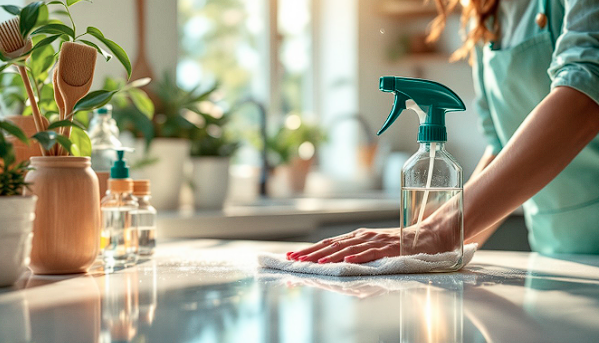
A basic DIY cleaning kit built from vinegar, baking soda, and essential oils covers most household cleaning jobs for a fraction of what a cabinet full of specialty sprays costs, and refilling a reusable spray bottle from a large jug of vinegar is close to pennies per use.
How Much You Could Actually Save
Big lump-sum claims (some sites cite five figures over a decade) are hard to verify and depend heavily on your household size and habits. A more useful way to think about it is payback time — how long before a swap has paid for itself:
| Swap | Typical Upfront Cost | Rough Payback Time |
|---|---|---|
| Wool dryer balls | $18–$25 | A few months |
| Reusable water bottle | $15–$30 | 1–3 months for regular bottled-water buyers |
| Reusable food storage | $30–$60 | 6–12 months |
| Smart plug (per appliance) | $12–$18 | 1–2 months if it catches a hidden energy drain |
| Programmable thermostat | $100–$250 | Under a year |
| DIY cleaning supplies | $10–$15 (ingredients) | Immediate on refills |
The fastest payback items — dryer balls, water bottles, and smart plugs — are also the cheapest to try, which makes them the natural starting point.
How to Start Without Overspending
The cost-myth around eco-friendly products usually comes from people trying to replace everything at once. A better approach:
- Finish what you have first. Don’t throw out unopened paper towels or half-used cleaning bottles — use them up, then replace with the reusable version.
- Start with the fastest payback items. Dryer balls, a water bottle, and one or two smart plugs are cheap enough to try without much risk, and you’ll see the savings within weeks.
- Track one bill before and after. If you’re testing a thermostat or smart plug, compare your electric bill for a month before and after — it’s the only way to know if it’s actually working for your house.
- Skip anything you won’t consistently use. A reusable product only saves money if it replaces the disposable one; a $40 glass container set that sits in a cabinet while you keep buying bags saves nothing.
FAQ
Do eco-friendly products really save money?
Yes, but not all of them, and not immediately. Savings typically come from reduced replacement needs, lower utility bills, and less waste disposal cost, and over time these benefits outweigh the higher upfront investment — the key is picking swaps that replace something you buy repeatedly.
Which eco-friendly products save money fastest?
LED lighting, refillable items, and efficient electronics tend to deliver savings within the first year. Wool dryer balls, reusable water bottles, and smart plugs are also fast, often paying for themselves within a few months.
Are eco-friendly products always more expensive upfront?
Usually, yes — sustainable products still tend to cost more upfront than conventional alternatives, even as prices have come down. The savings show up over the product’s lifetime, not at checkout.
Do wool dryer balls actually work better than dryer sheets?
They reduce static and soften clothes through physical movement rather than a chemical coating, and most comparisons find they cut drying time, which is where a chunk of their savings comes from.
What’s the single best eco-friendly product to start with?
There’s no universal answer, but a reusable water bottle or a pack of wool dryer balls are usually recommended first because they’re inexpensive to try, have almost no learning curve, and show savings quickly.
Can I save money on cleaning products without buying anything “eco-friendly” branded?
Yes — a basic set of DIY cleaning products made from vinegar, baking soda, and essential oils covers most cleaning needs for less than store-bought “green” cleaners, since you’re not paying a brand premium.


Leave a Comment